
.jpg)
Introduction
A warehouse picking robot is not a robot arm placed beside a tote. It is a system that must identify the correct item, estimate pose, choose a grasp, avoid collisions, verify the pick and hand the result to the next process.
This guide covers the complete cell so that cameras, grippers, software and material flow are evaluated together.
Key findings
- Perception performance depends on the item set and presentation.
- Gripper selection is often the largest determinant of pick coverage.
- Cycle time must include perception, retries and exception handling.
- WMS and conveyor integration define whether the cell receives correct work.
- Pick verification is necessary because a successful motion is not always a successful order.
Warehouse robotic picking system layers
A cell is only as reliable as its weakest layer.
| Layer | Function | Failure example |
|---|---|---|
| Perception | Detect item and estimate grasp | Transparent package or occlusion |
| Gripper | Acquire and retain item | Vacuum leak or insufficient clearance |
| Robot and planning | Move without collision | Singularity or unreachable pose |
| Verification | Confirm correct item and successful pick | Double pick or dropped product |
| Warehouse integration | Receive and close work | Inventory mismatch or lost message |
Acceptance tests should report results by item class and exception type.
Perception and item identification
RGB, stereo, structured-light or time-of-flight cameras capture the bin or tote. Software segments objects, estimates pose and predicts grasp points. Barcode or text recognition may be required to distinguish similar items.
Reflective packaging, transparent objects, deformable bags and clutter reduce reliability. Testing must use the actual catalogue distribution.
Grippers and grasp strategy
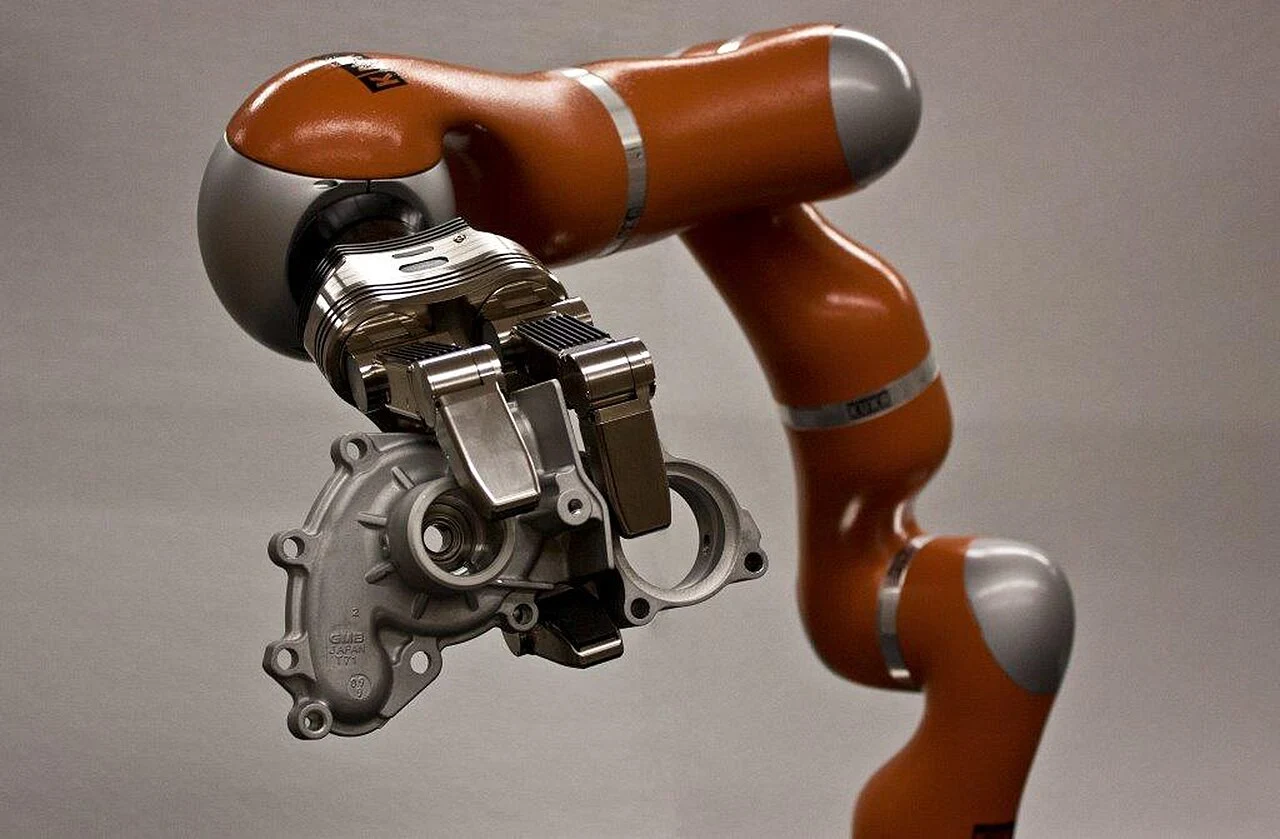
Vacuum grippers work well on many sealed packages but struggle with porous, wrinkled or perforated surfaces. Finger grippers handle other shapes but need clearance and collision planning. Hybrid tools expand coverage at the cost of complexity.
The system should detect vacuum loss, finger closure, unexpected force and dropped parts. Tool change can help, but it adds cycle time and maintenance.
Motion planning and cell design
The arm needs collision-free approach, grasp and placement paths. Camera position, tote height, reach, singularities and cable routing change usable workspace.
A fast arm cannot compensate for poor item presentation. Singulation, tote design and conveyor timing may improve the system more than a higher-speed robot.
WMS, conveyors and order logic
The cell receives work from a warehouse management or execution system, confirms item identity and reports completion or exception. Inventory data and physical contents can disagree.
Integration must define retries, substitutions, damaged products, empty bins and manual review. Each exception needs a traceable state.
Acceptance testing
Measure pick success by SKU, presentation, fill level and packaging condition. Include dropped items, double picks, damaged items, no-pick decisions and manual interventions.
Throughput should be reported over a representative shift, not only the fastest successful cycle. Maintenance and replenishment time belong in the operating model.
Limitations and missing information
- No single gripper covers every warehouse SKU.
- Benchmark results may use simplified object sets.
- Throughput depends on upstream presentation and downstream handling.
- Integration and manual exception labor can dominate operating cost.
Conclusion
Measure verified picks by SKU and presentation over a representative shift. Include retries, double picks, drops and manual exceptions when comparing throughput.
Frequently asked questions
What is a warehouse robotic picking system?
It is an integrated cell using perception, a robot, a gripper, planning, verification and warehouse software to pick items.
Which camera is best for robotic picking?
The choice depends on range, lighting, object material, field of view and required accuracy. Real items should be tested.
Can one gripper pick every warehouse item?
No. Vacuum, fingers and hybrid tools cover different object properties.
How should pick rate be measured?
Measure success and throughput by SKU, presentation and exception type over representative operating periods.
Why does a picking robot need WMS integration?
It needs correct work instructions, item identity, inventory updates and a defined exception workflow.
Sources and methodology
Related TechniaHQRobot guides
Share this article
Share the current TechniaHQRobot article page.
Continue reading
Open the latest robotics reporting, Physical AI analysis and hardware notes.