
Introduction
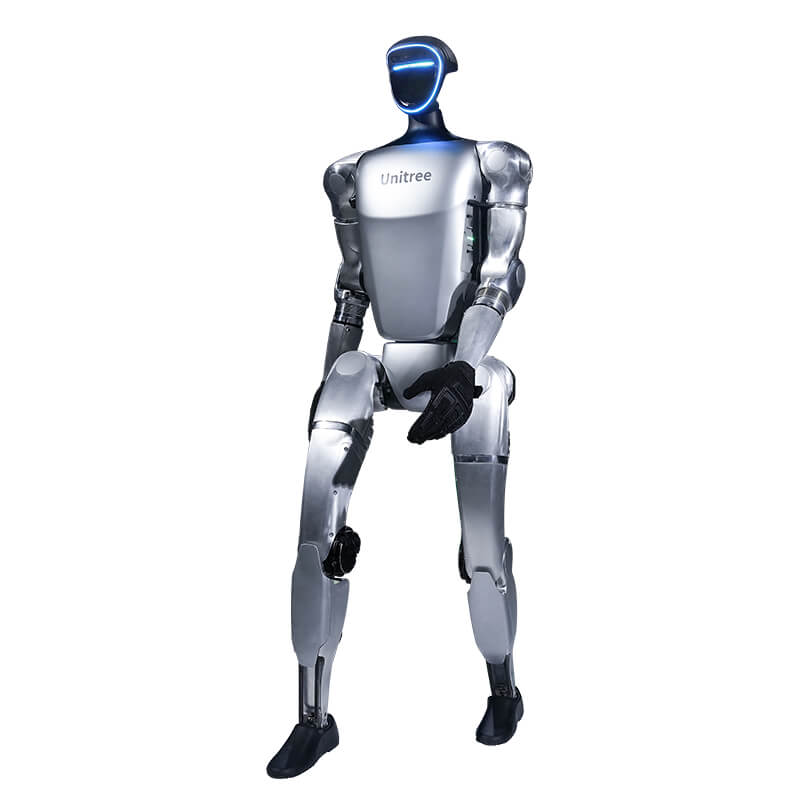
Unitree has published the repository for UnifoLM-WLA-1.0. The company describes it as a 6B-parameter general-purpose humanoid foundation model trained with about 2,500 hours of real-robot data.
The reported task set covers 64 tabletop and whole-body manipulation tasks. The same model is designed to work with two-finger grippers and several five-finger hands.
Source review date recorded for this article September 29, 2026.
The action vector is an interface, not a joint count
The released processing guide defines 54 action values and 60 state values. Slots cover different end effectors and body modules; unavailable slots are zero-filled and masked. A 54-dimensional output therefore does not mean every supported robot has 54 actuated joints. Cross-hand support describes a common representation, not equal performance across hands.
The open release is split into pieces
The repository records the training and fine-tuning code and model release on September 28, 2026. LoRA support remains planned. Its processing guide resamples actions at 30 Hz and uses 30-point chunks, spanning roughly one second; this is an action horizon, not a measured motor-control frequency.
A state/action indexing trap
The guide places left and right leg actions at indices 42–47 and 48–53, but leg states at 48–53 and 54–59. Reusing the state offsets for the action vector would map the wrong channels. Check the two layouts separately when adapting a dataset.
Limitations and missing information
- Unitree's task and training figures come from its project repository.
- Results across different end effectors should not be treated as equivalent without matched tests.
Sources and methodology
Share this article
Share the current TechniaHQRobot article page.
Continue reading
Open the latest robotics reporting, Physical AI analysis and hardware notes.