

Introduction
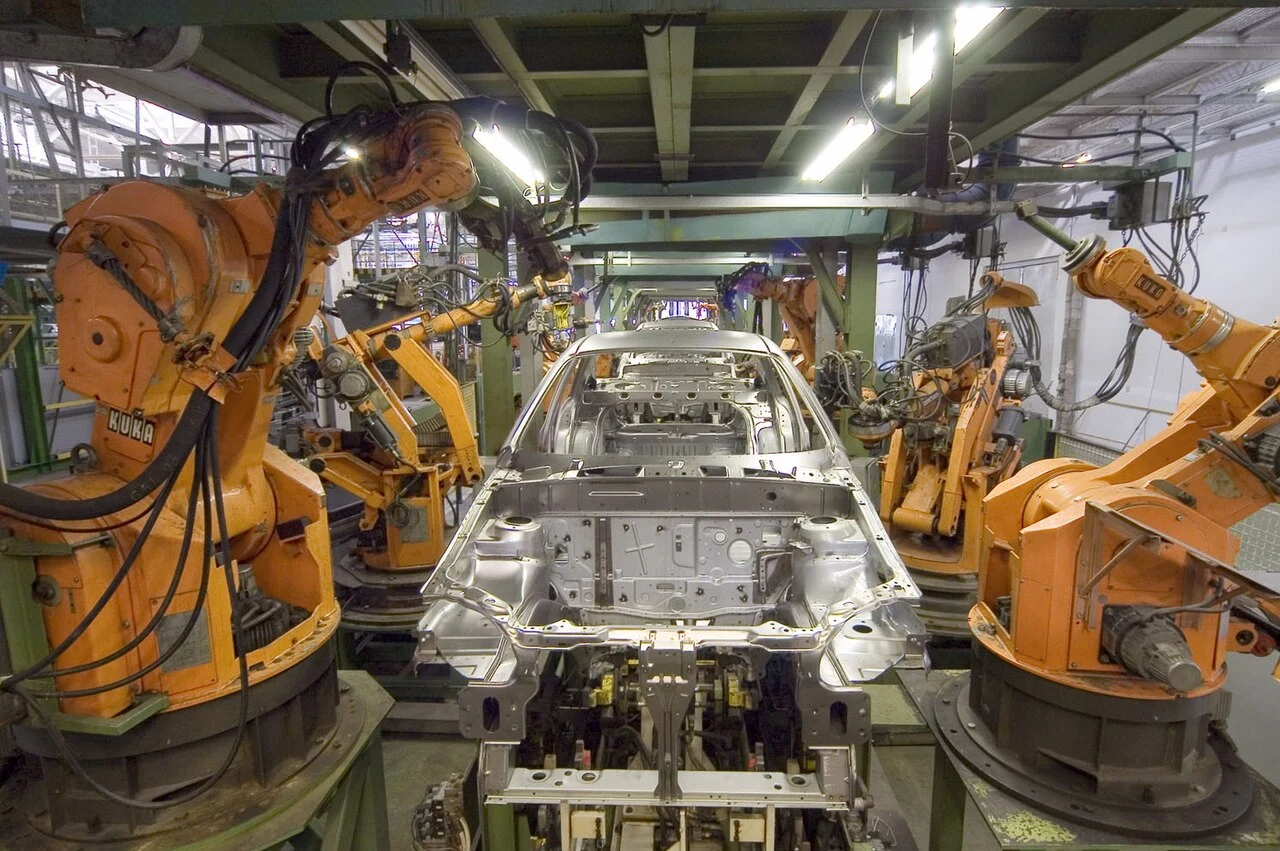
A robotic production line is a linked system of machines, robots, conveyors, buffers, controls and inspections. Optimizing one robot cycle can reduce total output if it creates starvation, blockage or quality escapes elsewhere.
This guide explains the architecture and acceptance tests needed before automating a complete line.
Key findings
- Line throughput is controlled by the bottleneck.
- Buffers can improve flow but hide quality problems.
- PLCs and line control coordinate robots and machines.
- Vision and tooling require real production variation.
- Maintenance access and recovery must be designed before installation.
Robotic production line layers
The line must be accepted as a system.
| Layer | Purpose | Acceptance check |
|---|---|---|
| Process | Defines work and takt | Representative cycle distribution |
| Robot cell | Executes operation | Quality and recovery |
| Material flow | Moves and buffers parts | No starvation or blockage |
| Control | Coordinates states and recipes | Fault and restart logic |
| Safety | Controls risk | Validated modes and access |
Local safety standards and qualified engineering apply.
Process and takt design
Map each operation, transfer, inspection and manual step. Record cycle-time distribution and changeover, not only average time.
Choose automation where the process is stable enough to define and measure.
Robot cells and tooling
Each cell includes the robot, end effector, fixture, sensors, guarding and controller interfaces.
Tooling should tolerate part variation and expose failure detection.
Conveyors, buffers and control
Conveyors and buffers connect cell timing. PLC logic manages interlocks, recipes, faults and restart sequences.
Recovery must preserve part identity and prevent duplicated processing.
Safety and acceptance
Risk assessment covers normal operation, setup, jam clearing, maintenance and foreseeable misuse.
Acceptance tests should run representative products, shifts and fault scenarios.
Limitations and missing information
- Process variation may be underestimated.
- Cycle-time demos may omit changeover.
- Recovery logic can be more complex than normal operation.
- Maintenance space is often constrained.
Conclusion
Accept the complete line using representative products and fault scenarios. Confirm that restart logic preserves part identity and restores flow without duplicated processing.
Frequently asked questions
What is a robotic production line?
It is an integrated sequence of robotic and automated operations connected by material flow, control and safety systems.
How is line throughput calculated?
It depends on the bottleneck, variability, downtime, buffers and product mix.
What does a systems integrator do?
The integrator designs and commissions the complete application around the robot and production process.
Why test fault recovery?
Production losses often occur during jams, restarts and manual intervention rather than normal cycles.
Sources and methodology
Related TechniaHQRobot guides
Share this article
Share the current TechniaHQRobot article page.
Continue reading
Open the latest robotics reporting, Physical AI analysis and hardware notes.